"A Force of Nature" - Remembering Glenn Scott

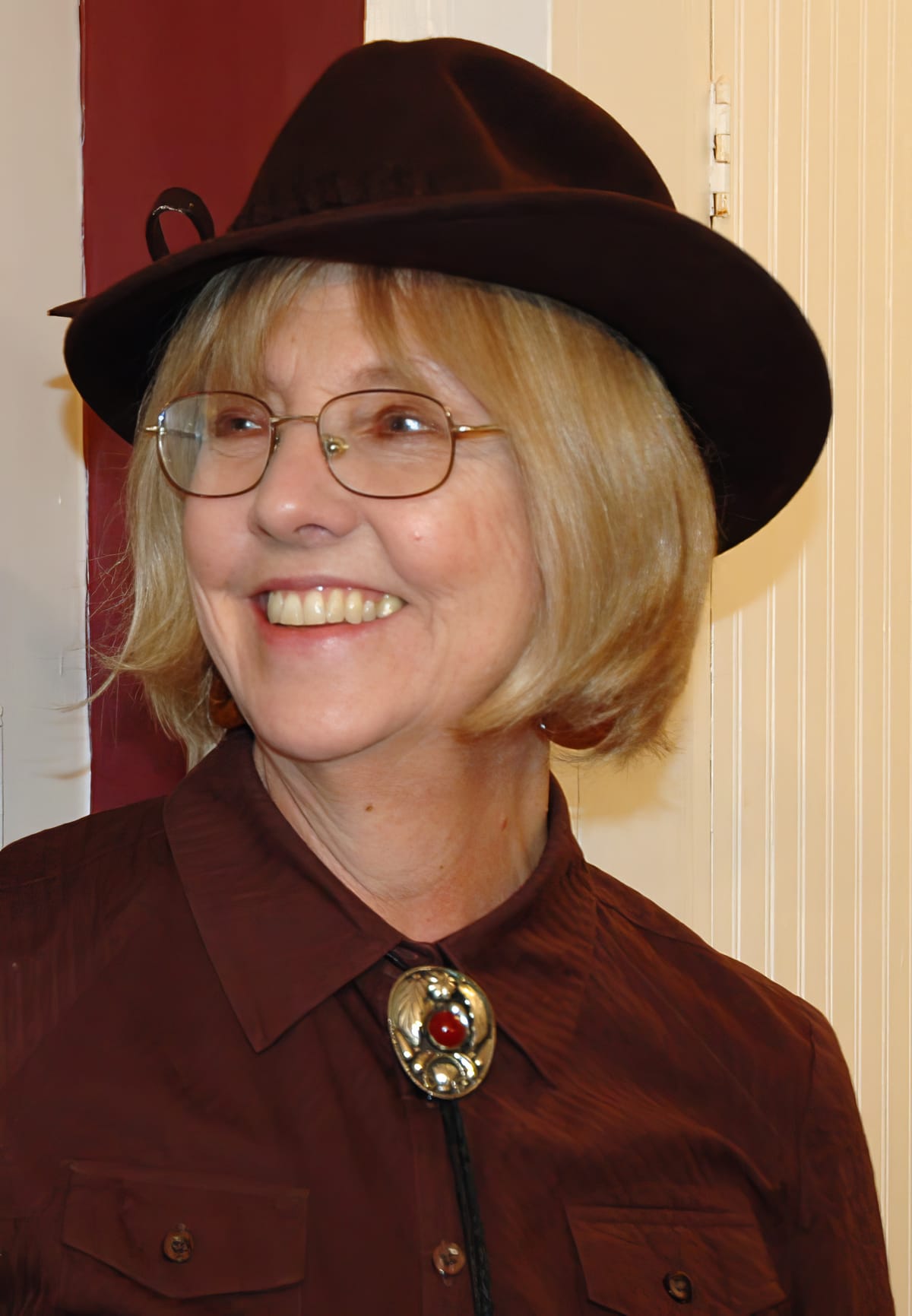
Neither the loudest nor bossiest person in a room, Glenn Scott (1948-2018) did manage to buzz with the most energy. I met her in 2017 when she was already undergoing chemotherapy for the cancer that would kill her; still, she was seemingly everywhere the Democratic Socialists of America (DSA) organized its most social of socialist activities. I remember Glenn handing out flyers at a bowl-a-thon where our teams were raising money for the National Network of Abortion Funds, and she was also one of the prime movers of the DSA’s socialist feminist reading group, alongside Alice Embree. The group, of which I was a member, met to talk over Women, Race and Class by Angela Davis at picnic tables and inside library conference rooms.
It should be obvious by now that Glenn was a committed a socialist feminist, and she also worked in labor organizing, raised a family, and much more — most often while based here in Austin. It is almost impossible to understate the work she did, and the number of organizations with which she was affiliated. I was lucky just to have known her.
Richard Croxdale, however, knew her the best. He and Glenn were life partners for almost fifty years, and together they were committed Rag staffers; advocates for a better, humane and more progressive politics; parents and then grandparents. Richard works at Austin Community College as an adjunct professor of economics. I wanted to interview Richard about a newly-funded initiative to process and allow research access to the archive of Glenn’s life work, the Glenn Scott Papers Project.
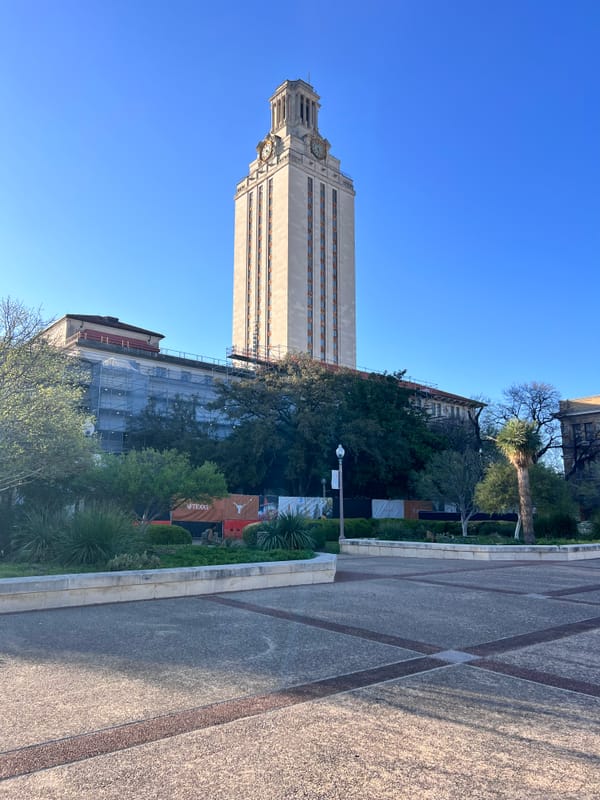
In October of 2025, Melissa Hield — Executive Director of the People’s History in Texas (PHIT) — emailed those of us on the PHIT listserv. “When Glenn Scott passed in 2018, she left a legacy of leadership, commitment to social justice, and kindness that inspires us today. In August, Alice Embree and I went through some of the 70 boxes of Glenn’s papers that Richard Croxdale donated to the Briscoe Center for American History at UT Austin. We saw clearly that her collection needs to be made accessible to everyone. Will you help us?”
I was one of many who contributed, and the Glenn Scott Papers Project ended up completely funded after raising $11,600. With the money, the Briscoe Center was able to hire an intern archivist to begin work, and Hield updated contributors to the Project with further good news: “We hope to announce that the work is underway when Glenn is inducted into the Texas AFL-CIO Labor Hall of Fame on January 24, 2026.”
Richard and I met on a one-off cold day at Cherrywood Coffee to talk. A little hampered by allergies, he nonetheless was open and generous with his time. When it comes to the Project, he notes that the archives will include a lot of information on labor history, and that “the most important historical stuff is that period when we were so active in Austin.” This would be in the mid-seventies and eighties, back when the New American Movement fused with the Democratic Socialist Organizing Committee to form DSA.
The archives also include material related to second wave feminism and what Richard calls “international solidarity” activities including the boycott of apartheid South Africa and in support of the toppled Allende presidency in Chile. Anti-racist activism and housing tenant work will also be represented, along with campaigns for the environment and against nuclear armament.
Richard shared all this with me and more, helping me with a biographical context to better understand the woman he described, lovingly, as “a force of nature.”
Glenn’s father died when she was young, leaving her mother to support two children on her own in Ft. Worth. “Her mother didn't really know how to handle things,” said Croxdale. The family lived off social security, and Glenn ended up going to Texas Tech for college, “which was cheap, really cheap, just ridiculously, stupidly cheap,” says Croxdale. “But she didn't have enough money.” Glenn got work as a pharmacist’s assistant, and began seeing someone who was then drafted. “Her friend who she was dating probably got shot about five minutes after he got off of the plane in Vietnam,” remembers Richard. “She began questioning a lot of things.”
Glenn returned to college and graduated with a BA in Latin American studies. She met Richard in 1969, and shortly thereafter Glenn was hired as an intern by the United States Information Agency (USIA), in part because of the strength of her Spanish skills. “I'd gone up to do some research in D.C., so we spent a little bit of time together up there,” said Richard, but it didn’t take long for Glenn to find that what the USIA was doing was “really awful,” as he puts it. Disillusioned, Glenn left to teach in Ft. Worth, and learned with no shortage of despair that “there was just nothing there for young girls. Nothing.” Glenn was inspired to go to graduate school to create ESL programs for students.
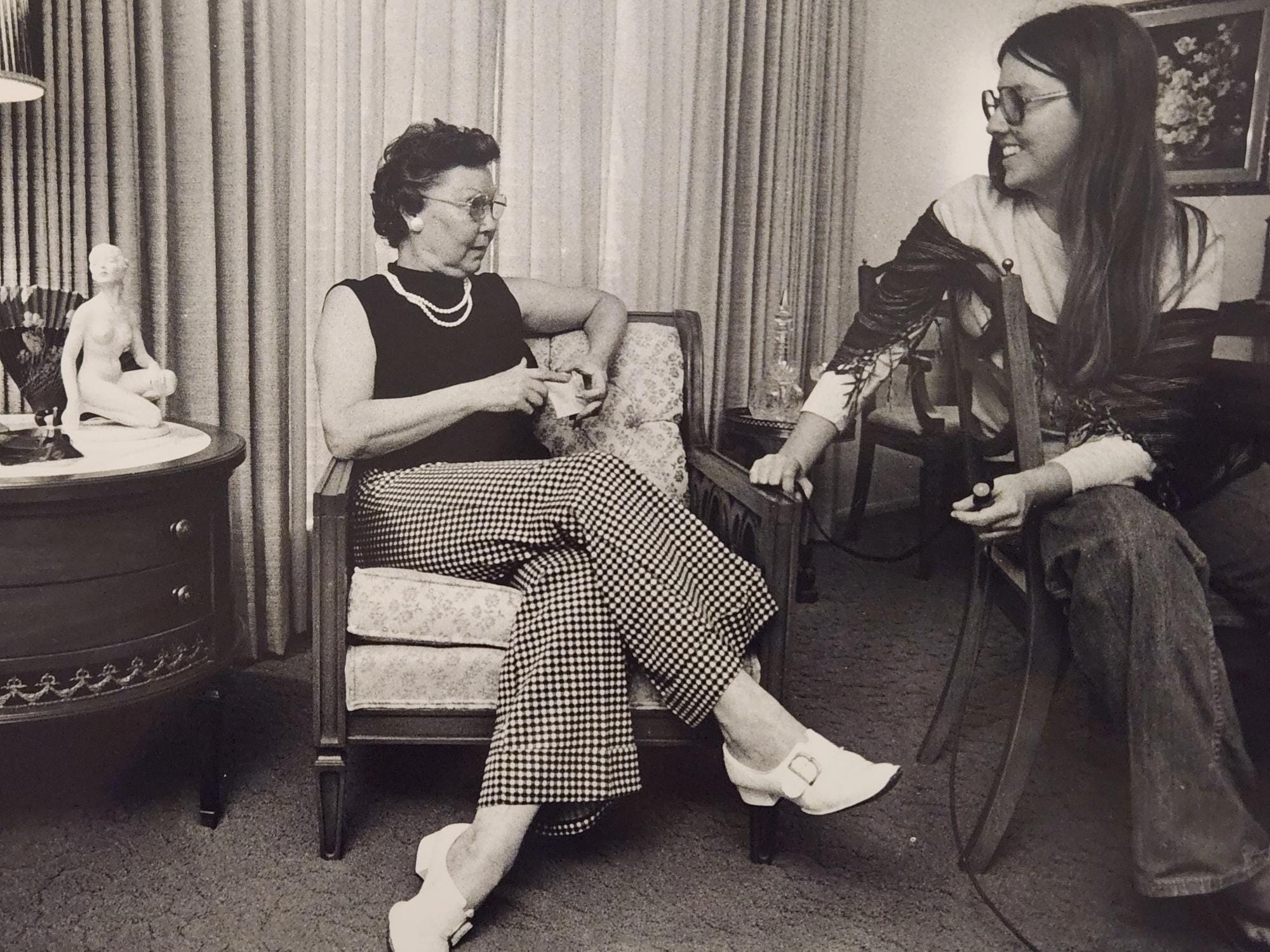
Earlier in our conversation, Richard had mentioned that “when you start looking at the hand you get dealt, both of us should have been middle class, stuck in the suburbs.” What foreclosed that possibility permanently, as far as I understand it, was a political awakening brought on in part by the underground press, which they first encountered in D.C. “There’s gotta be something like this in Austin,” Richard remembers thinking. Glenn and Richard moved back to Austin inspired by the possibilities of a political project expressed through mass media, and they began working at The Rag when that publication was undergoing a change to become more of an egalitarian and proudly feminist resource. While working at The Rag, Richard and Glenn also became strongly convinced of the importance of community power. In 1975, Glenn co-founded the aforementioned People’s History of Texas and began what was to be about four decades of organizing work.
An anecdote about Glenn’s time working for The American Federation of State, County and Municipal Employees (AFSCME) is instructive in understanding the pull she had on others. Remembers Richard: “They [AFSCME] sent her out and said they’ll pay her on a piece-rate basis: ‘We’ll pay you a certain amount for every member you bring in.’ She brought in so many members, they said it would be cheaper for them to hire her.”
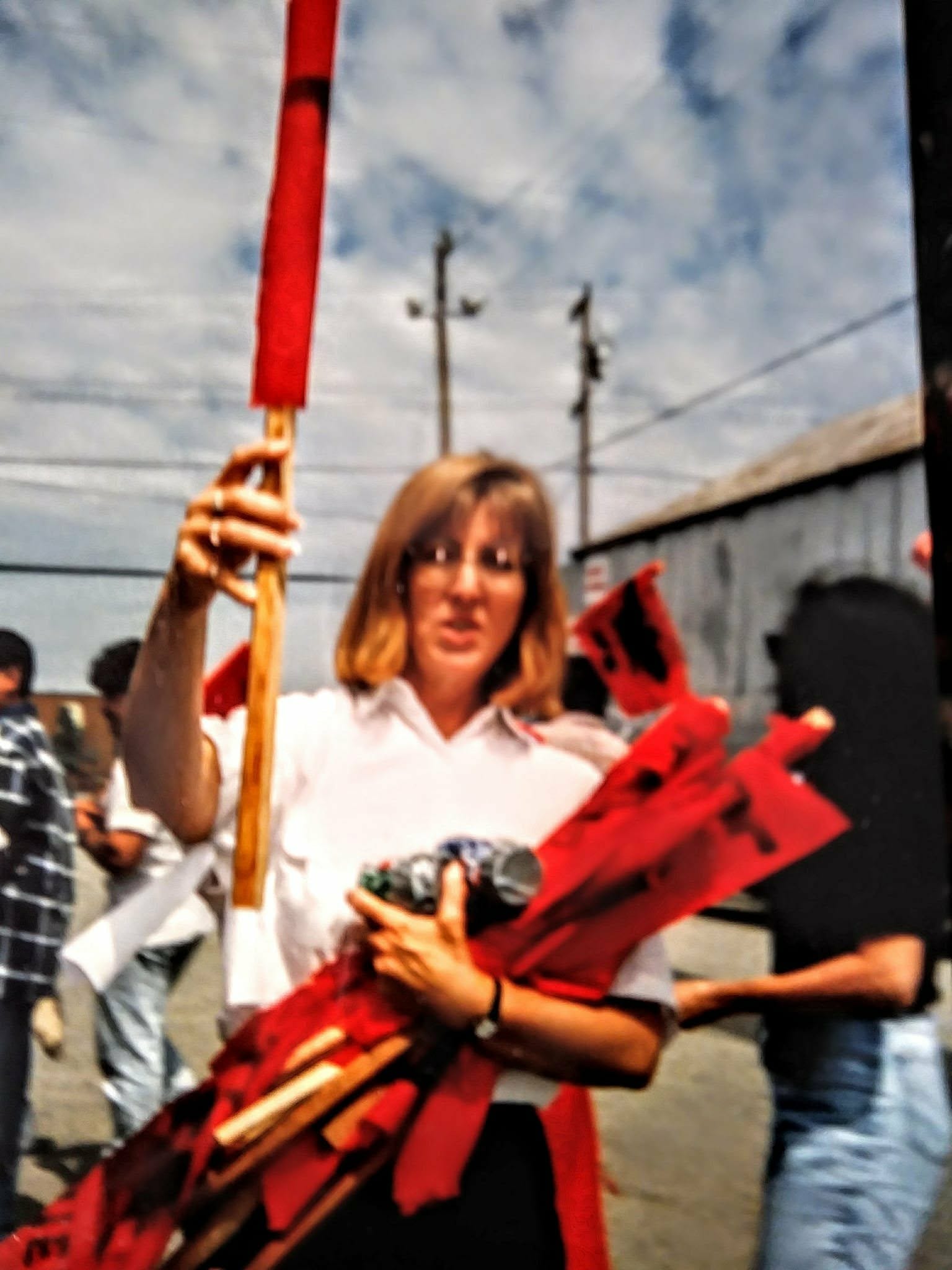
Glenn continued to do union organizing work until she finally retired. “She got a job with the nurses, which is the best job she's ever had, really. The national nurses union (National Nurses United, or NNU) should run the country.” The cancer worsened, and Glenn did not have the energy to organize the way she had. “They (NNU) were up with negotiations in El Paso at a couple of hospitals. And she knew if she got that night shift, you gotta be there at two o'clock in the morning so you could talk to [nurses] when they take breaks. She just realized, ‘I can't do that - I can't be up all the time.’ When she was younger, she could do it. She couldn’t do it anymore. So she resigned.”
What Glenn continued doing until she died was agitating for the positive, and one of her foremost skills was encouraging people new to progressive politics into action. She could be seen at protests, speaking at City Hall, or organizing the book club where I first got to watch her kick-off and then open a discussion. Our book club began to dwindle — as book clubs often do — and it eventually shrunk from a medium-sized group to finally just three or four of us at our last meeting. I made a point of asking myself to remember the moment, and to let Alice Embree and Glenn, two longtime friends and committed activists, quietly inspire me.
Both Alice and Melissa Hield have been an enormous help in making the Glenn Scott Papers Project a success, Richard points out. “It's honestly been really hard for me,” he says. “So Alice and Melissa have been fronting for me a lot.” Richard expects the papers will be available for research purposes in perhaps six months. Richard also believes an exhibit will open up at the Briscoe featuring some of the material, and I’ll update this post when we learn more.
Links of interest:
The Glenn Papers Project is no longer taking direct donations, but those interested can still contribute to the People’s History in Texas.
Dolph Briscoe Center for American History website, and Glenn Scott’s oral history at the Briscoe
Alice Embree’s website, and my review of her memoir