In With the Old: 2026 Paramount Theatre Summer Classic Film Series & Shine On Restoration Capital Campaign
The motion picture industry is undergoing a significant metamorphosis. With the influx of direct-to-streaming distribution, foreboding media conglomerate mergers, leery AI, and in-theatre mobile ordering pangs, the movie theatre experience as we know it is transforming — seemingly into a bad remake of itself. But before films befall a fate akin to Kafka’s Gregor Samsa, let’s roll the footage of a different cut of this theatrical tale.
Deep in the heart of downtown Austin, there’s a beacon of movie-going hope, a celebration of the big screen, and a portal to the past. Enter the Paramount Theatre.
From stage to screen, the Paramount Theatre hosts year-round festivals, music performances, speakers, comedians, special events, and film screenings — the latter being an exceptionally important cornerstone of the theatre’s prolonged impact on Austin. (Historic supercut, take one.)
Building an Austin Institution
Constructed in 1915 along Congress Avenue, this cultural landmark was originally named the Majestic Theatre and began as a vaudeville hub. The theatre also welcomed world-famous illusionist Harry Houdini in 1917, who allegedly left his mark quite literally with a hole in the ceiling from a suspension act. The aptly named “Houdini Hole” can still be seen today, located to the left of a hand-painted mural of Saint Cecilia, patroness of musicians (but not magicians).
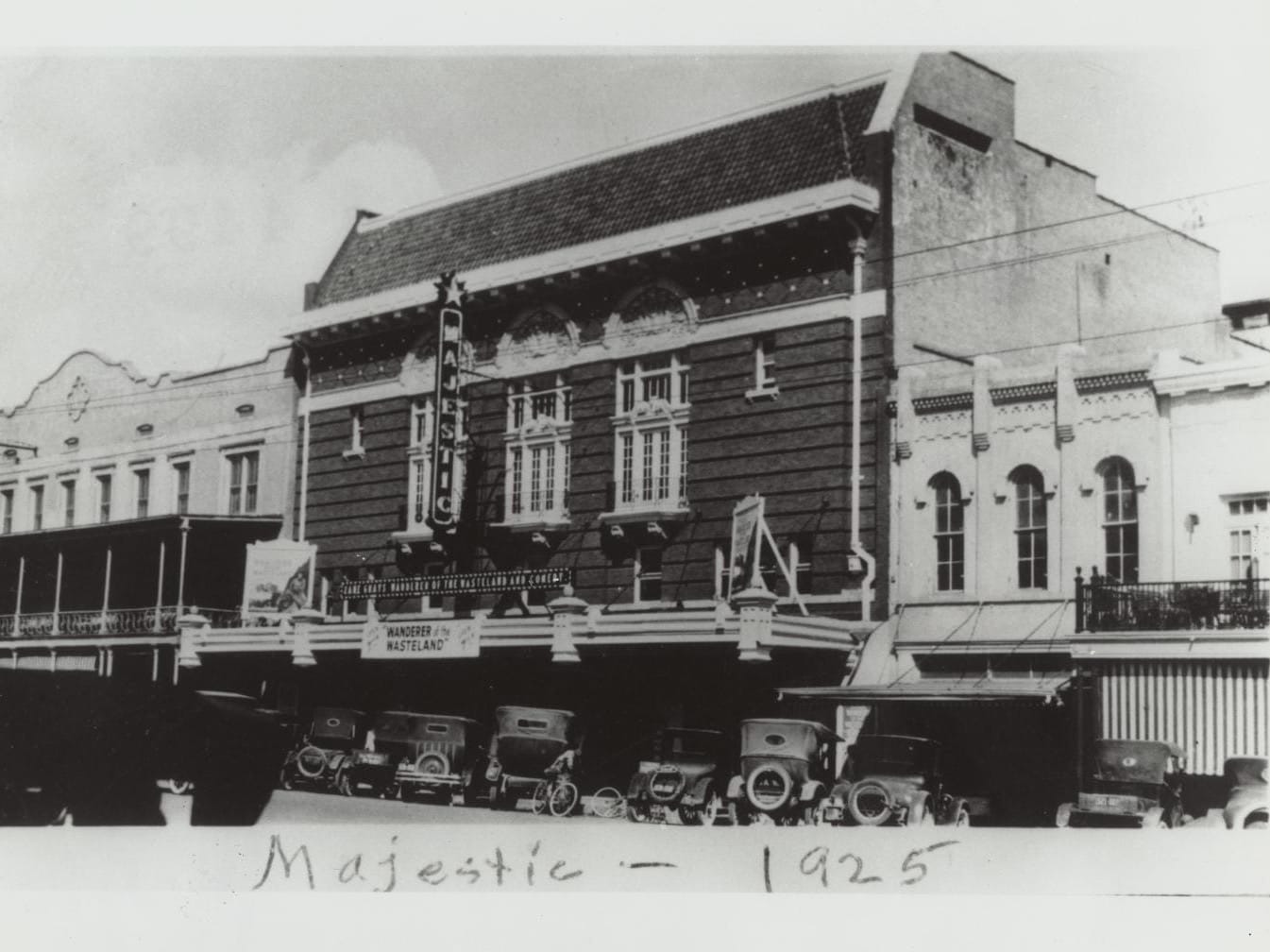
Following an Art Deco remodel in the 1930s, what was once merely Majestic officially became Paramount. This ushered in a new era of film premieres, beginning with an inaugural screening of The Marx Brothers’ Animal Crackers under the theatre’s new name. Other first-run films included Casablanca, Citizen Kane, and It’s a Wonderful Life.
Fast-forward to 1973, with new owners John Bernardoni, Charles Eckerman, and Stephen Scott embarking on a major historical restoration project for the next two years. Eager to fill the new seats, the Paramount Summer Classic Film Series was launched.
Spotlight on Classic Cinema
For over 50 years now, film enthusiasts and appreciators of the creative arts alike have converged in this sacred space each summer to worship at the altar of cinema during the Paramount Summer Classic Film Series. There is something transportive about seeing a film or performance at the Paramount. As one of only 20 remaining century-old theatres in the nation still operating, this iconic Austin theatre truly serves as a gateway into the past.
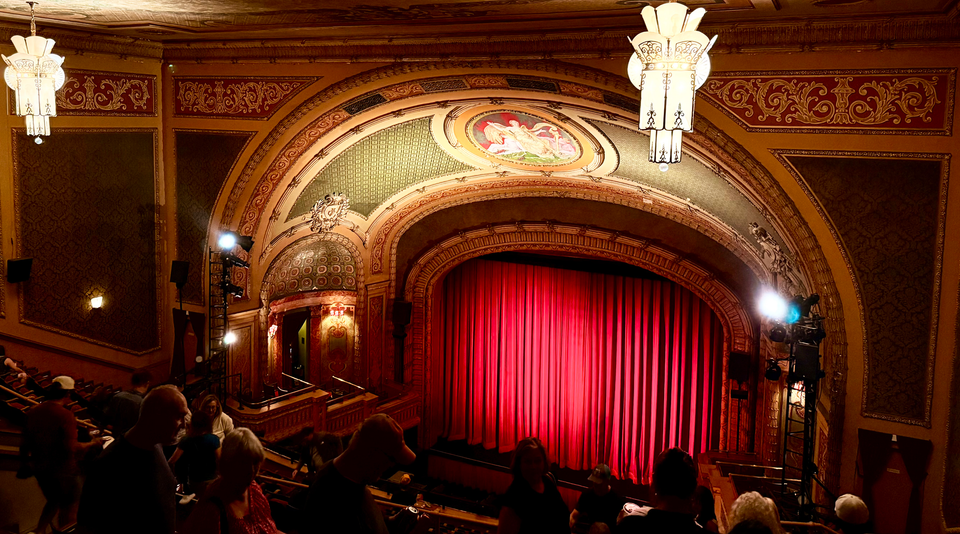
Starting at the Congress Avenue entrance, the dazzling Paramount blade and marquee draw visitors in like a moth to a flame — or a cinephile to a screen — in all its lightbulb-studded glory. A breadcrumb trail of Art Deco design guides guests from the lobby into the theatre auditorium. The ornate display of chandeliers, hand-painted ceilings, and gold accents delight the eyes even before the projector flickers.
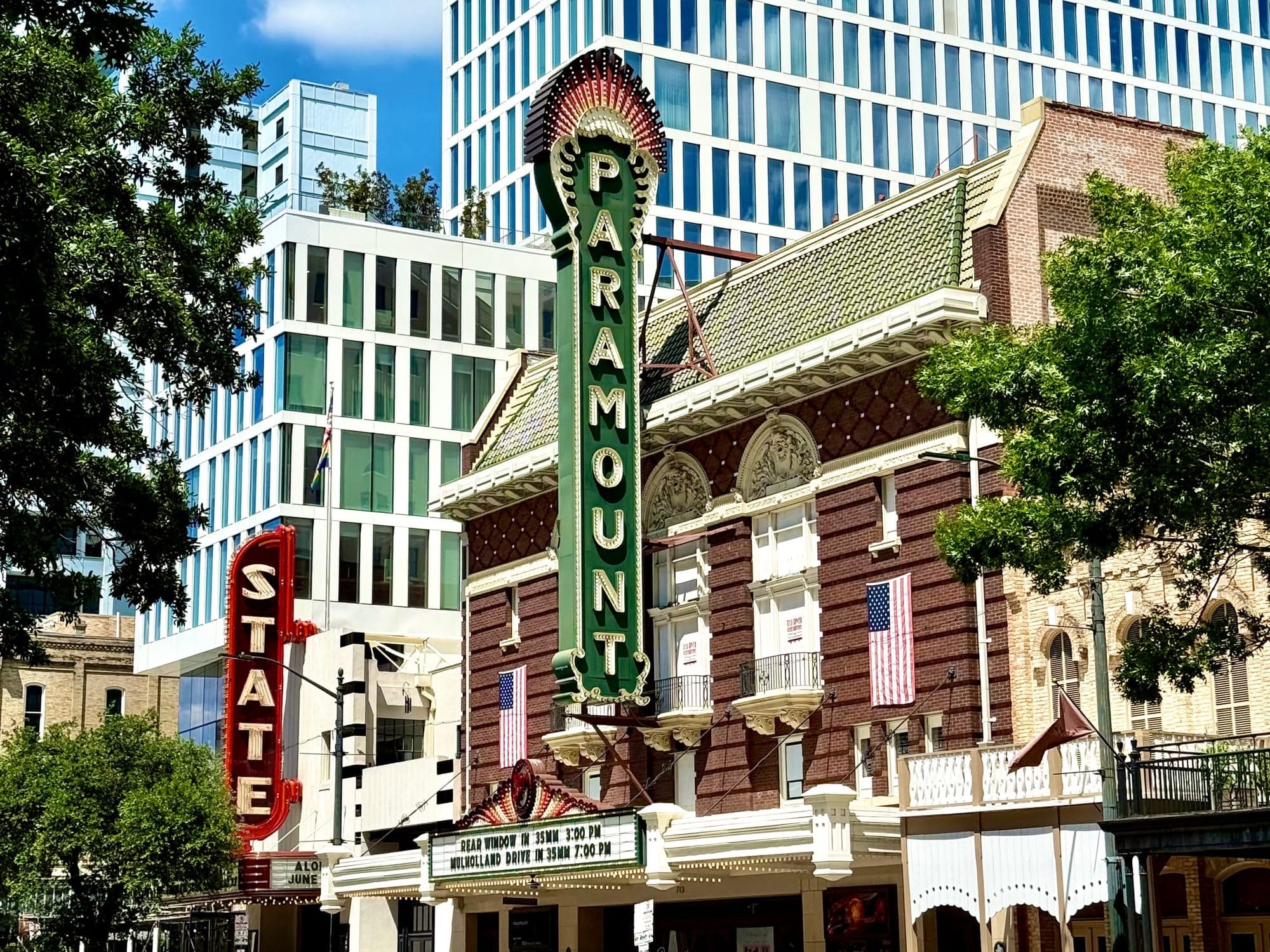
Seated beneath the glow of the screen, each attendee is teleported through time by way of the Summer Classic Film Series’ genre-bending program. From the Little Tramp to Paul Thomas Anderson’s The Master and the Master of Suspense himself, this program has something for everyone. The series also features 35mm prints, surprise guests, special anniversary screenings, and curated themes by guest programmers.
Notably, the 52nd season kicked off with three sold-out 35mm screenings — Casablanca, The Maltese Falcon, and Mulholland Drive — plus a 25th anniversary screening of Spy Kids with Robert Rodriguez, bringing together multiple generations of fans. In just one weekend, the significant impact on Greater Austin Area residents is undoubtedly seen. Some are seeking nostalgia, and others are just beginning their lifelong film journey.
Paramount attendance could be observed as an active case study on the phenomena that is community. Watching a movie may seem like a passive and solitary act — no talking, phone off (please!), and your full attention on the screen. But there is something magical about the communal act of sitting in a theatre with fellow film lovers, especially at the Paramount.
Deep in Our Hearts: The Paramount Effect
During any screening, a collective excitement can be felt through the synchronized laughter, gasps, muffled tears, and held silences. The audience’s energy is palpable. It’s the only theatre experience, when watching a quotable classic, that reciting a famous line in unison with 1,200 people feels healing. “Listen, I’ll prove it” with Pee-wee’s Big Adventure. As soon as you hear “The stars at night are big and bright…” you know exactly which chorus and clap sequence will echo throughout the theatre. (And if you don’t, no sweat — you’ll pick it up for your next viewing.)
Personally, I’ve had a lion’s share of repeat viewings, having attended the Paramount for over 30 years. Still, each time feels fresh because of its perennial, authentic audience.
Born in Austin and raised on Turner Classic Movies television, my love of classic films started early. While most late-90s tweens had boy bands plastered across their bedroom walls, I had Bringing Up Baby and other 1930s movie posters. My first round of Paramount screenings began in middle school and featured a week of screwball comedies from Capra to Hawks. I was instantly enchanted by the grandiose setting and theatrical past mixed with my own family history as a fourth-generation Austinite (and Paramount fan). Overtaken by the experience, I vowed to watch all of my faves on the big screen while continuing to discover new classics to bolster my cinema connoisseur status. Henceforth, the Paramount series became a summer tradition for me, as it has for many Austinites. Witnessing a classic in a place that has held a century’s worth of applause is its own kind of sorcery.
Another piece of the Paramount’s history (near and dear to this writer) pertains to a 1941 performance of the play The Philadelphia Story, starring Katharine Hepburn, Van Heflin, and Joseph Cotten. Later that year, Hepburn returned to the Paramount, but this time on the screen starring in the film adaptation, along with Cary Grant and Jimmy Stewart. To watch this beloved romantic comedy on the Paramount Theatre screen, in the same space that Hepburn graced, can feel like a veritable rift in the space-time continuum. This omnipresent history overlaid with each passing screening, each passing year, creates a theatre of life for Austinites to share in together.
Even in a world driven by algorithms and short-form content shifting the movie industry away from theatres, there is a beautiful dichotomy at play with the remarkable desire to come together in-person to watch films. We can thank the Paramount Theatre for being a vital meeting point for creatives and appreciators of the arts as well as fellow Austinites for continuing to fill the seats and bask in the glow of the illuminated screen. (Cue “In a Sentimental Mood” by Duke Ellington, who also once took the Paramount stage).
Renovation Intermission
To ensure the next hundred years are preserved for future patrons, the Paramount Theatre is undergoing the largest renovation since the 1970s. In mid-June, the theatre will close its doors for about nine months to ensure this creative sanctuary is set up for generations to come. The goal of the Shine On Capital Campaign is to restore the beauty of the Paramount to its 1930s grandeur, while completely reimagining its next-door neighbor, the State Theatre, in a similarly fitting Art Deco revival style.
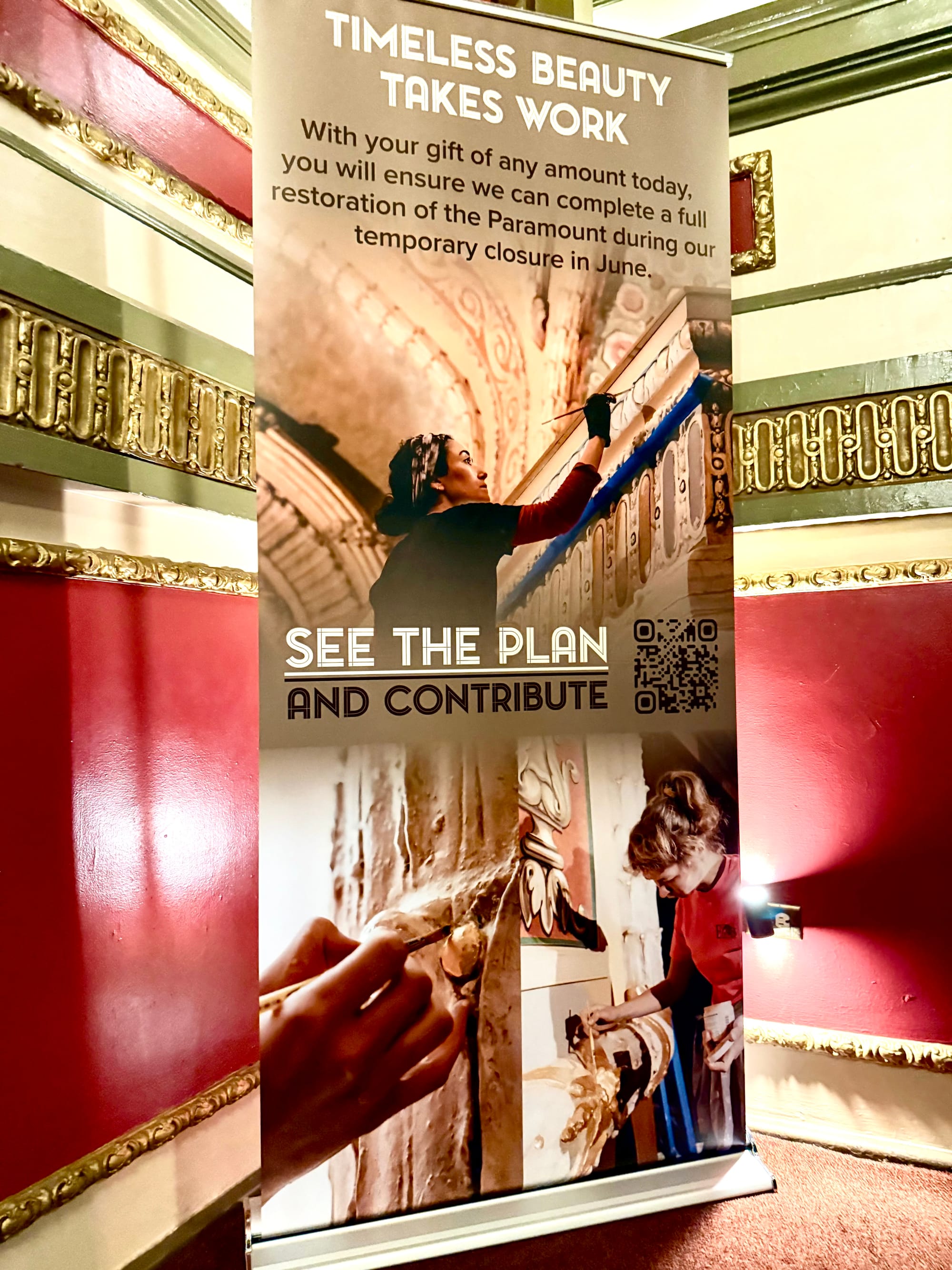
Artisan experts will tackle the restoration of plaster work, decorative paint, torn upholstery, cracked chandeliers, and water damage, all while using by-hand preservation techniques. Plus, one additional tweak which I’m sure longtime Paramount goers will be extra excited about: 1,200 new seats making way for more comfort, ADA-compliant configurations, and less seat squeak.
Additionally, the Paramount’s original 1915 blueprints included a vision of a third-floor ballroom that will be finally brought to life — but I’d watch the bar for any “all work and no play” New Year’s Eve party guests.
“Please support this beacon of light and community.” — Robert Rodriguez, Filmmaker
Fundraising is currently at the halfway marker, with a total project cost of $66M. Learn more about the revitalization project of this 110-year-old Austin institution and how to lend your support here.
See You at the Movies
Hold the credits: it’s not time for the curtain call just yet! After the 35mm screening of Singin’ in the Rain on June 11 and a Last Call Happy Hour on June 15, the Paramount will close for renovations, but the classic films will continue to screen at the State Theatre. Plus, catch select screenings at the Bullock Museum IMAX Theatre (because we’re gonna need a bigger screen) including Jaws, 2001: A Space Odyssey, and The Wizard of Oz. The series will conclude on Sunday, August 30, with the 85th Anniversary screening of Citizen Kane.
Explore the full lineup of the 2026 Summer Classic Film Series to completely renovate your summer plans and secure your historic seat. Sunscreen is not required. Neither is a DeLorean. Time travel comes with your ticket purchase.