The 2026 Austin Asian American Film Festival: Trailblazing Storytelling in the Year of the Fire Horse
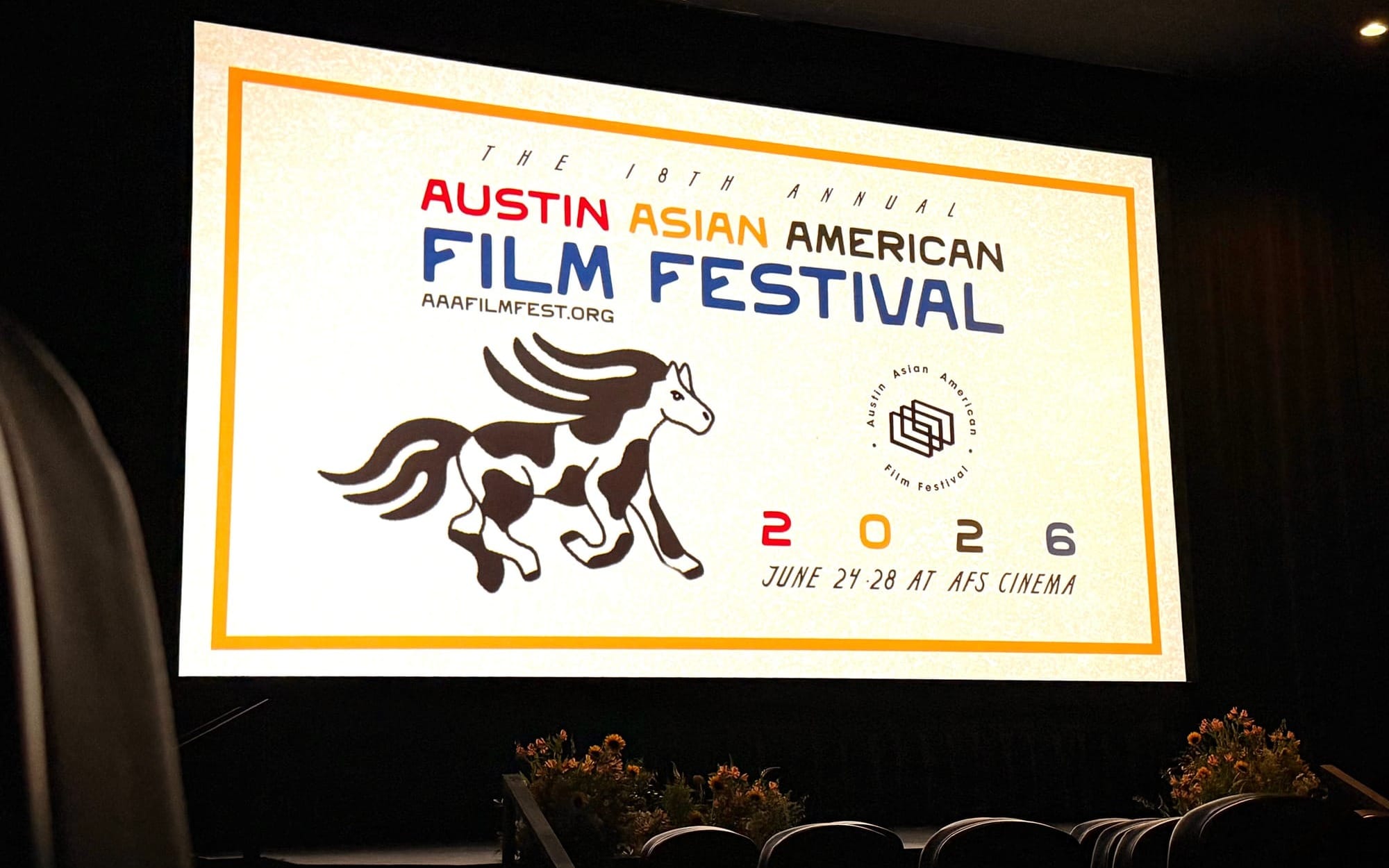
Following the Chinese zodiac calendar by the numbers, the “Horse” cycles through every 12 years, while another rarer breed only comes forth every 60 years. Enter the Year of the Fire Horse, with its symbolic soothsayings signaling a catalyst of forward momentum with a boundless, energetic spirit.
Embodying this emblem, the 2026 Austin Asian American Film Festival (AAAFF) did just that.
On June 24-28, the AAAFF program was packed with features, shorts, documentaries, VR, special events, and equine puns aplenty. Across 34 films from 20 different countries, AAAFF brought together an impressive lineup of new independent films, strutting unbridled creativity from filmmakers representing the Asian American, Native Hawaiian, and Pacific Islander (AANHPI) diaspora.
Celebrating its 18th annual festival, this cinematic experience not only spotlighted the importance of diverse representation in film and the sharing of cultural heritages, but also explored how community is found, with each boundless narrative connecting all of the galloping hearts in attendance. (And there was no reining in the horse puns. Rightfully so.)
For a look behind the festival curtain, I spoke with the Artistic Director of the Austin Asian American Film Festival, Neha Aziz, to delve further into AAAFF’s mission to produce programs that champion and expand the understanding of Asian and Asian American stories — plus Neha’s own creative vision and year-round festival programming and filmmaker experience.
A Pakistani-born multihyphenate, Neha is a writer, director, film programmer, podcaster, and communications manager for the Asian American Documentary Network (A-Doc). She is no stranger to film programming, also participating in Big Sky Documentary Film Festival, Palm Springs ShortFest, and the Cleveland International Film Festival (2022-2025).
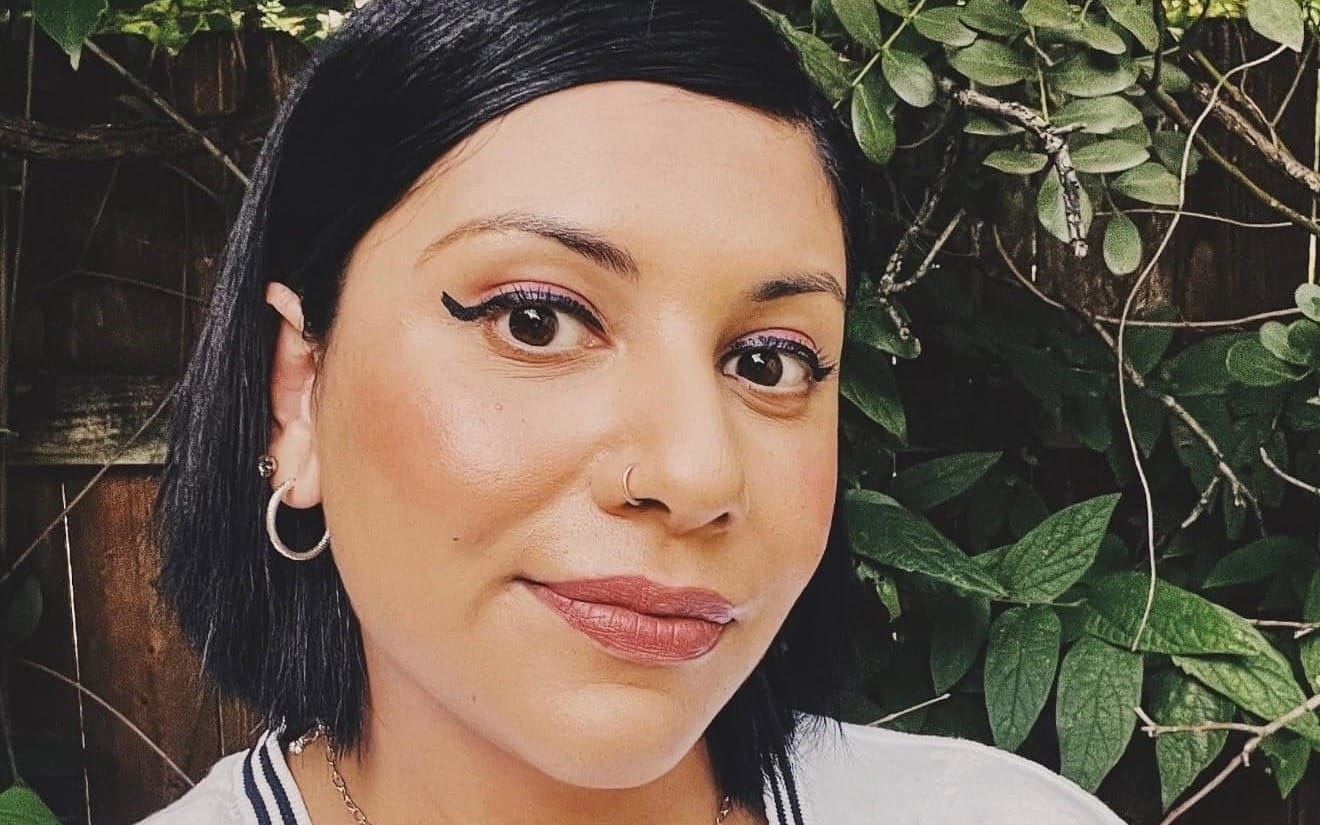
A part of AAAFF since 2020, Neha stepped into her role as the Artistic Director in 2023. “I feel like our festival has grown a lot. I came in at an interesting time, when it was virtual only. 2022 was my first year at AFS Cinema. I’ve watched the festival get bigger, our team has expanded, and we’ve introduced many new things.”
With the festival’s unique mix of local and international film projects, Neha states finding the right programming balance is key. “We want to make sure there is something for everyone, different points of view represented, different ideas being presented, and that there is a lot of education being done. Balance is so important. I feel we really make that conscious effort.”
Further emphasizing the spotlight on local involvement, Austin filmmakers also make custom bumpers that play before AAAFF films. “We want to be as present in the community as we can — getting filmmakers involved in all areas with the festival.”
“The point of a film festival is to showcase films, filmmakers, and their work. If we can make opportunities for that to happen, then we will.”
Hosting seasoned alumni to breakout filmmakers from around the globe, the festival also makes a concerted effort to connect with the Austin film community. “The local community aspect is really nice,” said Neha. “Because [AAAFF] is located at the AFS Cinema, there is easy access to the community for entry. AFS is a big community space.”
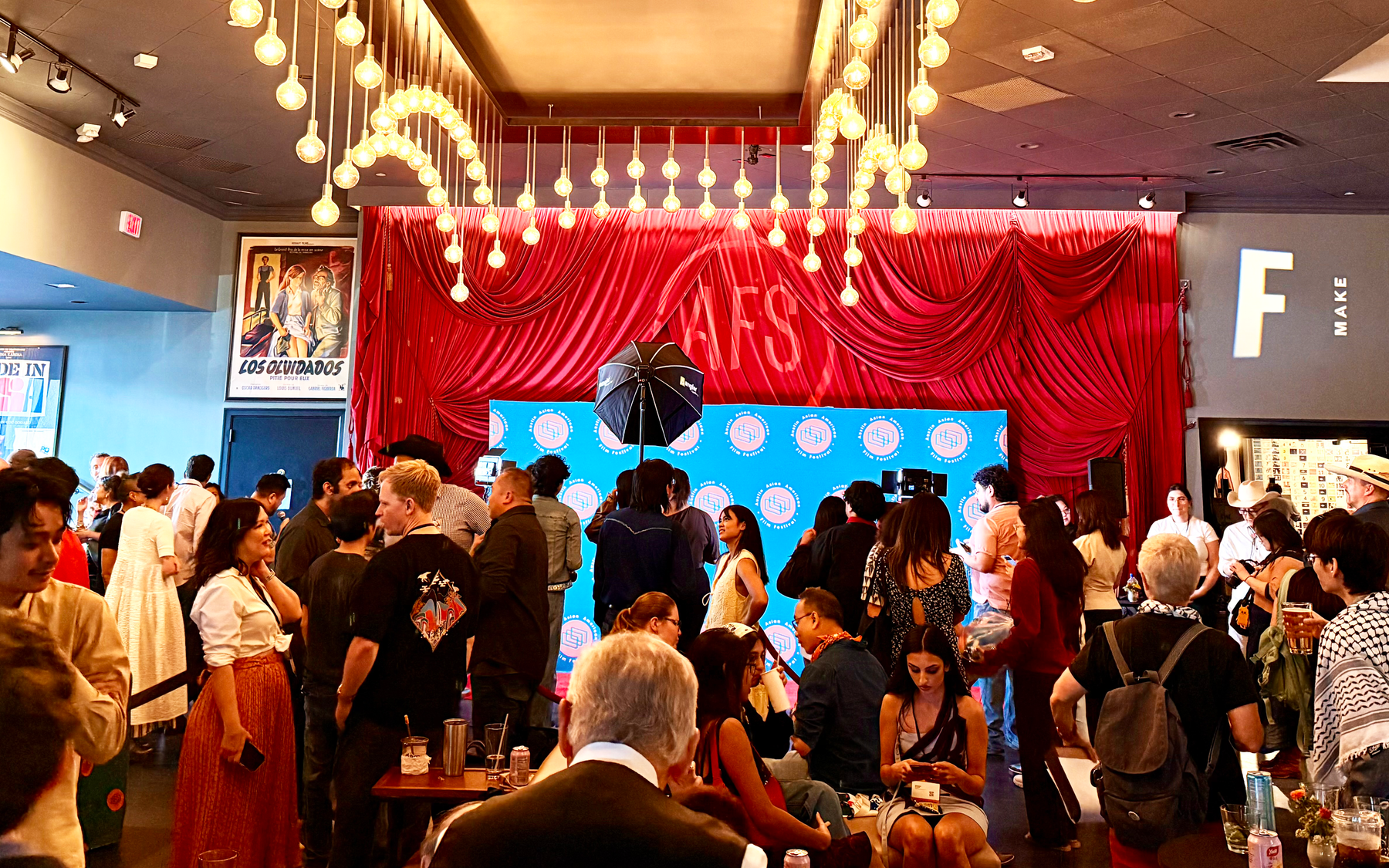
Throughout the festival footprint, the AFS Cinema lobby underwent a series of set design changes as filmmakers and special guests walked the red carpet dubbed the “Mane Event” and hosted snack breaks for badgeholders to saddle up to samosas before a Superstitious Saturday double feature from Pakistan: Ghost School, directed by Seemab Gul, and Lali, directed by Sarmad Sultan Khoosat. The lobby is where the community engagement magic happens, as Neha describes:
“I see people engaging with the filmmakers and in the Q&As. I see them coming up to programmers and staff to say, ‘Thank you so much for programming that film’ or ‘I related to this’ or ‘It’s so nice to see a film from this country.’ I hear those conversations — whether it's with the filmmaker or another festival goer — and that’s what is so special about the festival. We’re so contained [at AFS]...so we have that interaction constantly, and I can see how these films really impact the community.”
“I love when people are talking about films in the lobby – that connection is so important to me.”
Building a sense of community and haven for filmmakers to flourish at AAAFF also includes uplifting Asian and Asian American creatives with a program that reflects the importance of diverse representation in film. Demographic data conveys the AANHPI community is among the fastest growing racial and ethnic groups in the U.S. In the last decade, the Asian American community grew by nearly 40%; the Native Hawaiian and Pacific Islander community by almost 30% (Source: Asian Americans Advancing Justice).
“I think a lot of people feel like when they think of a film that is AAPI centered that it has to be related to trauma, and that’s not the case. It could be a comedy. It could be whatever. We just want to see AAPI representation on and off the screen, no matter what that capacity is.”
AANHPI representation in film, however, is a stat that doesn’t sync up with the momentum of the demographic data spikes. I asked Neha how she feels the needle has moved regarding AANHPI representation in Hollywood and the film industry at large.
“I don’t know. I feel like it’s tough. I feel like it ebbs and flows. There can be a sudden surge, but it really depends, sometimes on whether someone is popular or whatever. But I do think it’s really hard to get AAPI stories told because decision makers have a certain idea of what [AAPI] means so they may only want to see particular films. There are good years and bad years, but it’s never enough. There definitely needs to be more [AAPI representation]. But I do think having a lot of culturally specific festivals, whether it be AAPI or Latinx, really helps with barriers. These festivals are essentially made because people weren’t seeing films by these communities in larger film festivals.”
With a call to action for growing and normalizing different levels of representation throughout media arts, Neha urges that “only one viewpoint is not enough.” One major driver is the importance of narrative storytelling across many distinct heritages and lived experiences.
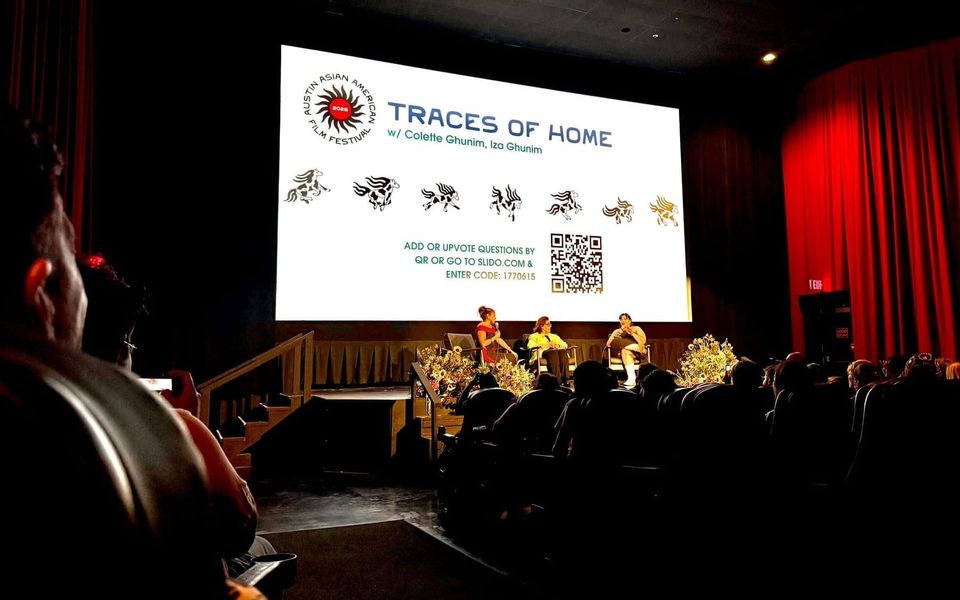
Looking at the 2026 AAAFF program, family dynamics step into the program spotlight with a mother-daughter trip exploring the different paths of love and grief in Lilian T. Mehrel’s Honeyjoon; Karla Murthy’s nostalgic lens chronicling her father’s immigrant experience from India to America in The Gas Station Attendant; and Colette Ghunim’s quest to reunite her parents with the ancestral homes in Palestine and Mexico they were forced to flee as children in Traces of Home.
“Family ties are an enduring theme in this year's headliners, whether it be your birth or chosen family,” said Hanna Huang, Executive Director of AAAFF. “It’s more evident than ever — the importance of nurturing and tending to the relationships in our ‘villages’ to ground ourselves.”
“I feel like we are all looking for something,” Neha said about the program’s thematic arcs. “Whether that is a job, a connection, or finding understanding in something. I feel like that is all present in our films.”
“You don’t necessarily need to be from a specific community to relate to someone of a different community. Those experiences are innately human, and I think that’s something I want for people to really understand.”
As the house lights raised following a screening, attendees began buzzing around to their own stories and film reflections. Personally, I had not beheld such an emotionally immersive lineup of films in a while — especially in such a uniquely communal cinema setting. I overheard a woman in a row in front of me say to her seatmate, “That was a lot. But a good kind of a lot.”
The herd of attendees exited the theater in a synchronized trot, filled with the energy of what we had seen and experienced at the festival. To be bold storytellers, empathic listeners, and collaborative trailblazers. After all, the Fire Horse proclaims it to be so.
__
Learn more about the Austin Asian American Film Festival at aaafilmfest.org. Join their AAVClub in partnership with AFS Cinema for year-round Asian/Asian-American films and events including exclusive panels, meetups, and advance screenings with filmmaker Q&As, to name a few.
Keep up with Neha Aziz – Check out her limited series podcast, Partition, and her directorial debut short, So, That Happened, currently on the festival circuit. Stay tuned for her next narrative short film, Tell Me How You Feel, and her documentary film debut, Wagah.